Buga-buga Hill: Where History Meets Adventure in Villaba, Leyte

There are mountains you climb for
the view, and there are mountains you climb because they have a story to tell.
Buga-buga Hill is both.

And perhaps that is what makes
Buga-buga different.
You don't simply climb a mountain
here.
You walk through history.

Into
the Wild
This was already my fourth climb
to the historical landmark of Villaba, and my third time taking what I
considered the easier route, starting from Barangay Catagbacan proper.
"Easier," however, is a relative
word.
The trail immediately reminded us
that Buga-buga was not built for comfort. The route cuts through thick jungle,
steep terrain, and sections where the vegetation seems determined to reclaim
every inch of the trail. On this particular climb, intermittent rain made the
ground even more slippery and the journey considerably more exhausting.
But that's the thing about
adventures.
If everything were easy, we probably
wouldn't call them adventures.
As we continued climbing, the sounds
of civilization gradually disappeared. What remained were the rustling leaves,
the occasional calls of birds, the sound of rain falling through the canopy,
and our own footsteps struggling against the muddy trail.
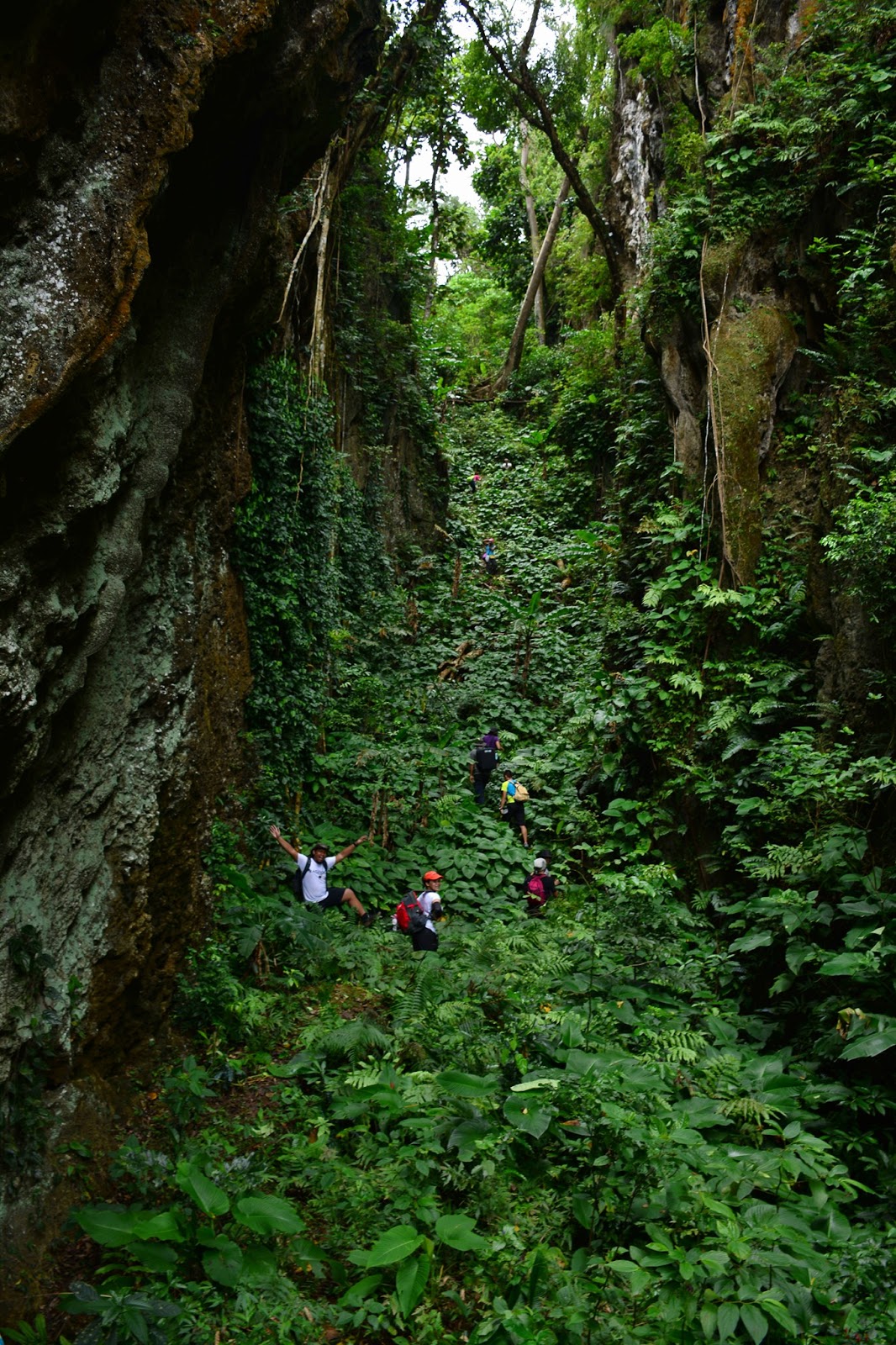
Before reaching the peak, the trail
squeezes through a dramatic passage between two towering limestone walls.
Creeping plants cling to the rocks.
Fallen trees lie across the forest floor. The narrow corridor feels almost
prehistoric, as if the jungle had swallowed an ancient world and left only this
passage behind.
Walking through it, I couldn't help but imagine myself inside an adventure movie like Jurassic Park or Journey to the Center of the Earth. Well... minus the dinosaurs.
The limestone walls and dense
vegetation create an atmosphere unlike anything you'd expect from a relatively
obscure mountain in Villaba. It is one of those places where you stop for a
moment—not because you're tired, but because you realize that the landscape
itself deserves your attention.

A
Mountain With a Memory
The beauty of Buga-buga can
sometimes make it easy to forget what happened here.
But every now and then, the history
catches up with you.
The same slopes that we now climb
for adventure were once occupied by soldiers fighting for survival. The same
caves that appear mysterious and fascinating today were once places of refuge
during one of the most devastating periods in Leyte's history.
Even today, relatives and family
members of Japanese soldiers who died in the area have reportedly visited the
site to remember their loved ones.
That thought changes the way you look at the mountain. It is no longer simply a hiking destination. It becomes a reminder. A reminder that mountains can hold stories far older and heavier than our own.

The
Final Push
By this point, the rain had already
made the trail more challenging. Mud stuck to our shoes, branches grabbed at
our clothes, and every steep section demanded another burst of energy.
Still, we kept moving.
The goal wasn't simply to reach the
summit. It was the experience of getting there—the struggle, the laughter, the
exhaustion, and those little moments when everyone in the group silently
wonders why they agreed to climb in the first place.
But somehow, once you are already
there, you wouldn't trade the experience for anything.
That is what nature does.
It takes you away from the noise of
everyday life and gives you a different kind of perspective. You become tired,
muddy, wet, and sometimes completely exhausted—but strangely, you also come
home feeling lighter.

One interesting piece of information I learned from our local guide, Tatay Felimon, was that the summit of Buga-buga Hill marks the boundary of three barangays, Buga-buga, Catagbacan, and Jalas.
So when you reach the famous summit boulder, you're not simply standing at the highest point of the hill; you're standing at a place where three communities meet. It's a fascinating little piece of local geography that adds another layer to the experience of climbing Buga-buga.
It was one of those little pieces of
local knowledge that you probably wouldn't find in a typical travel guide.
And that's another reason I enjoy
exploring places like Buga-buga.
The best stories are often told by
the people who live there.

More
Than Just a Climb
Buga-buga Hill is not the kind of
destination you visit simply to tick another mountain off your list.
Its appeal comes from the
combination of history, geology, jungle, mystery, and adventure.
The imposing limestone formation is only
part of the experience. The trails reveal a landscape that feels wild and
largely untouched, while the caves and surrounding terrain carry stories from
the Second World War. The mountain's historical significance has also been
recognized in local accounts as one of Villaba's important heritage landmarks.
For an adventurer, it is a challenging playground. For a history enthusiast, it is a place to remember. For a nature lover, it is a living landscape. And for someone like me, it is all three.

Until
the Next Climb
This may have been my fourth time
climbing Buga-buga, but somehow, the mountain still managed to show me
something new.
Perhaps that's what keeps drawing me
back.
Every climb changes with the
weather, the company, the trail conditions, and even your own state of mind.
The mountain remains the same, but you never quite experience it the same
way twice.
Buga-buga taught me once again that adventure isn't always about reaching the highest point.
Sometimes, it's about understanding the place beneath your feet.
Sometimes, it's about listening to stories hidden inside the landscape.
And sometimes, it's simply about getting completely soaked in the rain, covered in mud, exhausted beyond words, and still smiling when you finally make it back down.
Buga-buga isn't just a hill.
It is a piece of Villaba's history,
wrapped in limestone and jungle, waiting to be explored—and, more importantly,
remembered.


A
small reminder for future explorers
If you plan to visit Buga-buga Hill,
don't treat it as an ordinary hiking destination. The terrain can be steep,
slippery, and heavily vegetated, particularly during wet weather. A local
guide is highly recommended, both for navigation and for understanding the
history and stories connected to the area.
Respect the community, respect the
historical significance of the site, and leave no trace behind. Take
nothing but photographs, leave nothing but footprints, and let the mountain
keep its stories for the next generation.


Comments
Post a Comment